
 EN
EN


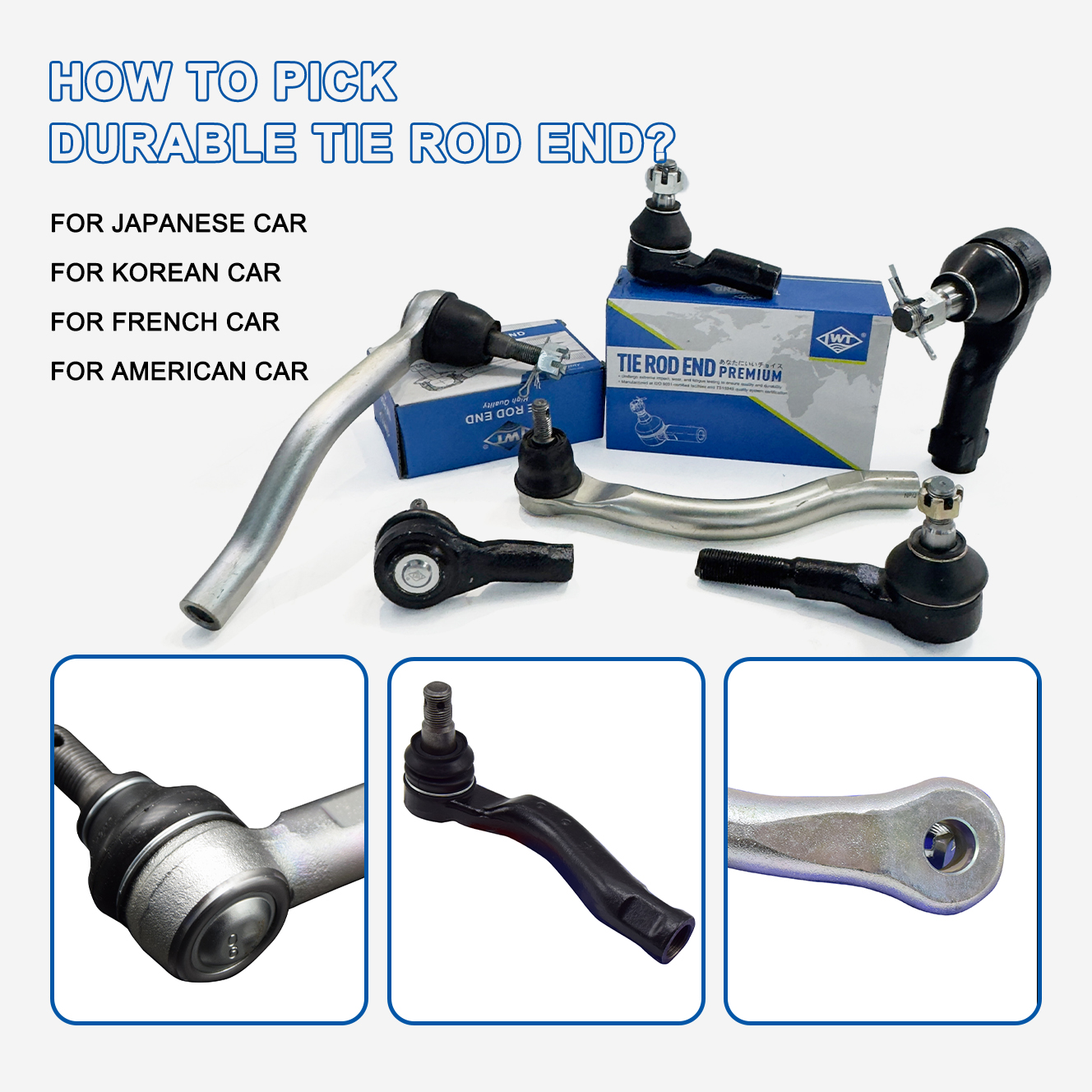
Understanding the Role and Importance of Tie Rod End in Vehicle Steering
The role of tie rod end in steering precision and alignment
The tie rod ends basically link up the steering system with the wheels themselves, turning those back and forth movements from the steering rack into side to side motion at the tires. Keeping proper toe alignment depends on these components working right, so the car goes straight down the road without pulling one way or the other, plus it helps keep tires wearing evenly. If they start to wear out though, drivers will notice their cars drifting around on the highway or seeing strange patterns on their tire treads. These problems usually mean spending money on wheel alignments sooner than expected and sometimes even replacing tires before their time because of all that extra stress on them.
How tie rod end failure impacts vehicle safety and handling
When tie rod ends get worn out or come loose, they create slack in the steering system. This leads to slower response times when turning, makes the steering wheel shake while braking, and causes all sorts of problems when going around corners. The National Highway Traffic Safety Administration has found that about one in every eight steering related accidents happens because these parts have deteriorated over time. If something goes completely wrong while driving on the highway, drivers could suddenly lose all ability to steer properly, which turns what should be normal driving conditions into potentially dangerous scenarios for everyone involved.
Integration of tie rod end within the suspension and steering system
Tie rod ends sit between the steering rack and steering knuckle, working together with control arms and shock absorbers to keep wheels properly aligned when driving on bumpy roads. The way these components are designed needs to match how much the suspension moves up and down, otherwise we get something called bumpsteer where the front wheels point slightly differently than intended during bumps or potholes. Getting this right makes all the difference for drivers who want clear feedback from their steering wheel and cars that handle predictably whether they're cruising on smooth highways or navigating rough city streets.
Types and Configurations of Tie Rod End: Inner vs. Outer and OEM Standards
Differences between inner and outer tie rod end designs and applications
The inner tie rod ends basically connect the steering rack to that middle rod thingy and handle most of those side to side forces when driving. These parts stay pretty protected from all the dirt and grime on the road so they tend to last much longer than their outer counterparts. Now the outer ones attach right to the steering knuckle and actually send the movement straight to the wheels themselves. Since these components take the brunt of every pothole, rock chip, and salt spray from winter roads, they just don't last as long. Mechanics see these outer tie rods showing signs of trouble first time and again - drivers notice things getting loose, feeling wobbles in the steering, or hearing strange clunks whenever they make a turn.
Integrated vs. separable tie rod end assemblies in modern vehicles
When manufacturers integrate inner and outer tie rods into one unit, they basically simplify the whole installation process while cutting down on places where things might go wrong. We see this setup quite often in budget cars and smaller models because makers want to keep production costs low and assembly straightforward. On the flip side, separable designs show up mostly in performance machines, trucks, and commercial vehicles. These setups let mechanics replace just the outer part without dealing with the entire system. The advantage? Technicians can fine tune wheel alignment much better, which means fewer trips back to the shop for adjustments over time. Sure, there's some extra work involved initially, but most fleet managers swear by these modular systems when it comes to saving money in the long run.
OEM specifications for tie rod end by vehicle class and usage
When it comes to designing tie rod ends, OEMs really take into account what each type of vehicle needs. For instance, sedans typically go with lighter materials that can handle everyday driving without being overkill. But when we look at SUVs and trucks, these require much tougher components made from forged steel because they face harsher conditions day after day. Commercial fleet operators know this well since their vehicles undergo strict testing procedures to make sure everything holds up against continuous strain. Smaller cars sometimes feature special bushings that help reduce road noise, whereas sports cars focus on precision engineering with tighter manufacturing tolerances to resist wear better over time. Getting replacement parts right matters a lot too – sticking close to factory specs helps maintain proper steering response and extends how long these critical components last before needing replacement.
Material and Design Innovations for Maximum Tie Rod End Durability
High-tensile steel vs. forged alloy: material choices in tie rod end manufacturing
High-tensile steel remains the standard for most passenger vehicles, offering strong yield strength (>150 KSI) at a competitive cost. Forged alloys, though 20–30% more expensive, provide superior fatigue resistance and are preferred in heavy-duty or harsh-environment applications, such as commercial fleets or pothole-prone urban routes.
Corrosion-resistant coatings and extended service life
Zinc-nickel electroplating along with thermal diffusion techniques create pretty solid protection against water damage and those pesky road salts we all hate. When tested according to the standard ASTM B117 salt spray method, tie rod ends with these coatings typically hold out against red rust formation for around 600 hours or so. That's actually about six times better than what happens with regular uncoated parts. For folks dealing with harsh coastal environments or areas that get heavy snowfall during winter months, this kind of treatment really makes a difference. We're talking about cutting down on how often these components need replacing by somewhere between 40% and 60%, which adds up to big savings over time when considering maintenance costs alone.
Seal technology and grease retention under extreme conditions
Advanced multi-lip nitrile seals with helical grease channels maintain lubrication integrity across extreme temperatures (-40°C to 120°C). Testing shows these retain 85% of factory grease after 50,000 pressure cycles, significantly outperforming standard boots. Effective sealing prevents particulate contamination, which contributes to 73% of premature ball-joint failures.
Advancements in ball-joint design for improved wear resistance
Modern tie rod ends use polymetric composite bearings that reduce friction by up to 35% compared to traditional metal-on-metal joints. Cross-drilled pivot studs ensure even lubricant distribution, while case-hardened races (58–62 HRC) resist deformation under oscillating loads. These improvements enable service intervals exceeding 100,000 miles in 90% of passenger vehicles under normal conditions.
Evaluating Longevity: Testing, Wear Indicators, and Real-World Performance
Salt spray testing and real-world exposure data for durability assessment
Manufacturers use ASTM B117 salt spray testing to simulate long-term corrosion exposure. High-performance coatings withstand 500+ hours in these tests—equivalent to eight years in corrosive environments. Field studies confirm that epoxy-sealed and multi-layer plated units reduce early failures by 60%, validating lab results in real-world conditions.
Performance in high-moisture and road-salt environments
In snowy regions, tie rod ends with hydrophobic grease and polymer seals maintain functionality for five or more winter seasons. Without protective cavity fills, salt intrusion causes internal corrosion within 18 months, accelerating wear. Effective sealing and lubrication are critical for longevity in chloride-heavy environments.
Wear indicators and service life benchmarks for reliable maintenance
Mechanics assess tie rod end wear by measuring free play—exceeding 3mm is a common threshold for replacement. Service life varies by driving conditions:
| Driving Conditions | Expected Longevity | Critical Replacement Milestone |
|---|---|---|
| Normal Urban | 80k–100k miles | Free play >4mm or abnormal steering |
| Extreme Weather/Off-road | 40k–60k miles | Visible salt corrosion at joints |
| Performance Driving | 30k–50k miles | Audible clunking during turns |
Using the wear rate model Vi = ki × F × S—where wear volume depends on load and sliding distance—enables predictive maintenance. As a best practice, preventive replacement every five years is recommended, even if mileage remains low.
Top Brands in Tie Rod End Durability: TRW, MOOG, Delphi, ACDelco, and ZF
TRW and MOOG: Engineering standards and heavy-duty performance
TRW and MOOG are recognized for engineering excellence, employing military-grade tolerances and rigorous validation testing. Their components are built to handle extreme loads and are widely used in heavy-duty and commercial applications. Precision manufacturing ensures long-term reliability under demanding conditions.
Delphi and ACDelco: Balancing affordability and long-term reliability
Delphi and ACDelco offer OEM-matching durability at accessible price points. Their use of zinc-nickel coatings and advanced sealing systems prevents grease loss and corrosion, supporting service lives of 60,000 miles or more. These brands are trusted by cost-conscious drivers who prioritize safety and longevity without premium pricing.
ZF Friedrichshafen and premium OEM-tier durability expectations
ZF sets the benchmark for premium durability with aerospace-inspired materials and cryogenically stabilized forged alloys. Each unit undergoes 1,000-hour salt-spray testing and is engineered to exceed vehicle lifespan. Widely used in OEM and motorsport applications, ZF tie rod ends deliver unmatched performance in extreme conditions.
Consumer trust and aftermarket demand trends for leading tie rod end brands
Most professional mechanics go with TRW, MOOG, Delphi, ACDelco, or ZF when replacing parts because they simply last longer. Studies show these premium brands fail around 40% less often than cheaper alternatives on the market. The industry keeps putting these manufacturers at the top of their lists year after year for good reason. They stand out in how well they resist rust and just plain break down less frequently. This speaks volumes about what consumers actually want these days. After all, nobody wants to replace something again next month. Tie rod ends might not sound exciting, but they're absolutely essential for vehicle safety. Mechanics know this better than anyone else.
FAQ
What are tie rod ends, and what is their role in a vehicle?
Tie rod ends are components that connect the steering system to the wheels, converting the steering rack's movement into the appropriate directional motion at the tires. They are crucial for maintaining steering precision and alignment.
How can I tell if my tie rod end is failing?
Common signs of a failing tie rod end include wobbly steering, strange noises when turning, and abnormal tire wear patterns. If you notice your car drifting unexpectedly or experience delayed steering response, it's best to check the tie rod ends.
What causes tie rod ends to wear out?
Tie rod ends are subject to wear due to road debris, harsh environmental conditions, and aging. Outer tie rod ends are more prone to wear as they are directly exposed to road conditions.
How long do tie rod ends typically last?
The lifespan of tie rod ends varies depending on driving conditions. Under normal urban conditions, they last around 80,000 to 100,000 miles. Harsh environments or off-road conditions can reduce their lifespan to 30,000 to 60,000 miles.
Are premium tie rod ends worth the investment?
Yes, premium brands like TRW, MOOG, Delphi, ACDelco, and ZF offer better durability and longevity, making them a worthwhile investment for maintaining safety and reducing the need for frequent replacements.
Table of Contents
- Understanding the Role and Importance of Tie Rod End in Vehicle Steering
- Types and Configurations of Tie Rod End: Inner vs. Outer and OEM Standards
- Material and Design Innovations for Maximum Tie Rod End Durability
- Evaluating Longevity: Testing, Wear Indicators, and Real-World Performance
- Top Brands in Tie Rod End Durability: TRW, MOOG, Delphi, ACDelco, and ZF
- FAQ