
 EN
EN


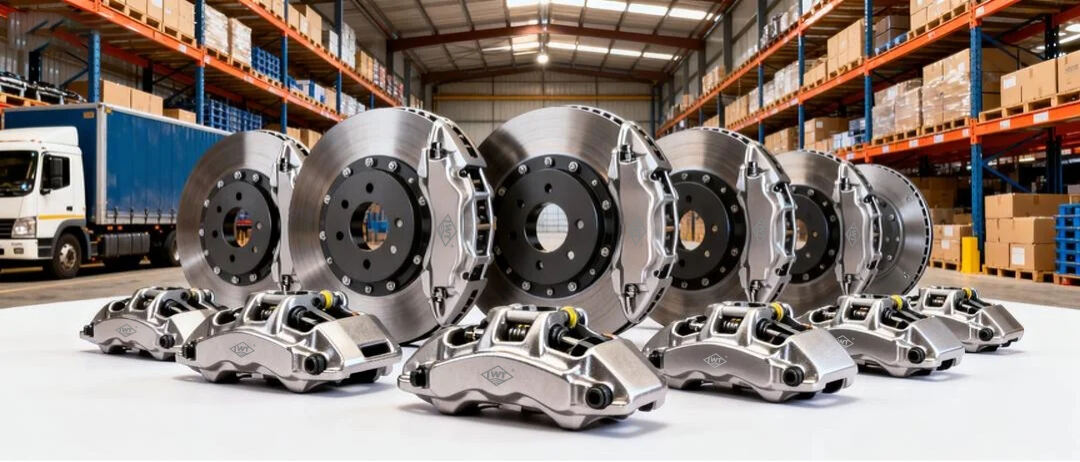
Prioritizing Quality Assurance in Brake Caliper Suppliers
The critical role of high-quality brake calipers in vehicle safety and reliability
The performance of any braking system really depends on good quality brake calipers. These components affect how responsive brakes feel, how well they handle heat buildup, and even impact how long brake pads last before needing replacement. A recent report from the Ponemon Institute back in 2023 showed something pretty startling actually. Brake part failures were responsible for nearly 4 out of every 10 maintenance holdups across fleets, adding up to around seven hundred forty thousand dollars worth of lost time each year for companies. When calipers work properly, they spread hydraulic pressure evenly throughout the system. This helps prevent warped rotors and those annoying situations where one side wears down faster than the other. And let's face it, nobody wants their brakes to start fading when driving downhill for miles or stuck in traffic for hours on end.
Evaluating brake caliper material quality and thermal resistance performance
Top-tier manufacturers use aluminum alloys with 10–12% silicon content for an optimal strength-to-weight ratio. These materials resist deformation at continuous operating temperatures up to 570°F (300°C), as verified through thermal resistance testing (KTG Auto). Key evaluation criteria include:
- Vickers hardness ratings ≥ 120 HV
- Salt spray corrosion resistance exceeding 500 hours
- Microstructure analysis to detect porosity defects
These specifications ensure durability under extreme conditions and reduce the risk of premature failure.
Recognized certifications (ISO, IATF, DOT) as benchmarks for manufacturing excellence
Certification compliance is a proven indicator of manufacturing quality, reducing defect rates by 67% according to IATF audit data. Suppliers should hold:
- ISO 9001:2015 for comprehensive quality management systems
- IATF 16949:2016, the global standard for automotive production
- DOT FMVSS 135 certification for U.S. regulatory compliance
Leading manufacturers demonstrate adherence through third-party audit reports and full material traceability, reinforcing trust in their production processes.
Warranty terms and manufacturer support as indicators of supplier confidence
When companies offer extended warranties, it usually means they believe their products will last longer than average. Most top manufacturers provide coverage lasting around 2 to 3 years for everything from materials to craftsmanship, which goes way past the regular 12 month guarantee most folks get. Looking at actual maintenance logs from commercial vehicle fleets tells us something interesting too. Vehicles covered under these longer warranties experience roughly 89 percent fewer problems during the first few months of operation. This effect is especially noticeable in trucks and other heavy duty equipment since those machines put so much strain on parts day after day.
Aftermarket vs. OEM brake calipers: Understanding quality perceptions and real-world performance
While OEM calipers maintain 99.2% fitment accuracy, premium aftermarket options now achieve 97.5% compatibility with enhanced material formulations. Independent testing reveals that top-tier aftermarket calipers outperform legacy OEM designs in key areas:
- 15% better heat dissipation
- 22% longer seal life due to advanced rubber compounds
- Clamping force consistency within ±2% of factory specifications
This narrowing performance gap makes high-end aftermarket calipers a viable, cost-effective alternative without compromising safety or reliability.
Ensuring Broad Compatibility with Comprehensive Brake Caliper Variety
Availability of OEM and Aftermarket Brake Calipers Across Vehicle Makes and Models
Today's fleet operations need suppliers capable of offering both factory spec parts and aftermarket calipers since service demands vary so widely across different vehicle types. According to recent market research from 2024, around four out of five commercial repair facilities keep at minimum three different caliper options on hand for each vehicle model they work on. Top tier suppliers now reach more than 95 percent of commercial vehicles throughout North America and Europe thanks to their dual sourcing approach detailed in last year's Brake System Compatibility Guide. The wider range of available parts cuts down on those frustrating mismatches that kept repairs waiting last year. Data from the Commercial Fleet Maintenance Survey shows these kinds of compatibility issues actually delayed about one in every four repairs back in 2023.
Seamless Integration With Existing Brake System Components
True compatibility goes beyond physical fitment to include full integration with existing brake systems. High-performance calipers must align precisely with:
- Rotor thickness tolerances (±0.2mm)
- Hydraulic line pressure requirements (1,200–2,000 PSI)
- Wheel clearance (minimum 3mm gap rule)
A 2024 Material Compatibility Study showed that properly integrated aftermarket calipers match OEM stopping distances within 1.5 meters at 60 MPH, effectively dispelling long-standing concerns about performance discrepancies.
Range of Materials and Performance Tiers
Brake calipers are now engineered to suit specific operational demands:
| Tier | Material | Heat Resistance | Ideal Use Case |
|---|---|---|---|
| Standard | Cast Iron | 450°C | Urban Delivery Vehicles |
| Heavy-Duty | Nickel-Plated Steel | 650°C | Mountainous Routes |
| Performance-Grade | Forged Aluminum | 800°C | High-Speed Fleets |
Thermoplastic composite calipers have also emerged as a durable, corrosion-resistant option, offering 40% longer service life in salt-exposed environments compared to traditional alloys (DOT Winter Operations Report 2023).
Guaranteeing Supply Chain Reliability: Stock Availability and Inventory Management
Consistent Stock Supply to Prevent Service Interruptions and Downtime
Reliable suppliers maintain robust inventory buffers to prevent stockouts amid fluctuating demand. In 2023, 63% of fleet managers cited consistent stock availability as their top supplier requirement. Strategic safety stock planning—for calipers and related components like sliding pins and brackets—helps avoid costly downtime averaging $580/hour (Ponemon 2022).
Real-Time Inventory Tracking and a Scalable Warehouse Distribution Network
Inventory systems that run in the cloud give businesses around the clock access to what's happening at all their regional warehouses. When something needs shipping out, it can come straight from whichever location is closest to the customer. The results speak for themselves delivery times drop about 37% on average when using this method instead of relying on one central warehouse. Companies running multiple warehouses paired with automatic restocking alerts keep their shelves stocked properly throughout busy periods. Last year during the fourth quarter, which was particularly hectic for brake part replacements, leading suppliers hit an impressive 98.2% success rate in filling orders. That kind of performance makes a huge difference when customers need parts quickly.
Achieving Fast 3–7 Day Delivery Through Efficient Logistics and Regional Fulfillment
Global Logistics Infrastructure Enabling Rapid Delivery for Urgent Brake Caliper Orders
Companies that have distribution centers across North America, Europe and parts of Asia are able to ship brake calipers to customers in just 3 to 7 business days thanks to their regional stock locations. Take one American supplier as a case study they operate out of Memphis which sits close to FedEx's massive hub facility and another warehouse right next to the busy ports in Los Angeles. With this setup, they manage to get about 92 percent of all US orders shipped within four days flat. The difference compared to traditional methods where goods travel across oceans takes anywhere from 10 to 14 days makes a huge impact on customer satisfaction and operational efficiency for businesses relying on timely parts delivery.
Express Shipping Options and Strategically Located Fulfillment Centers
Speed-optimized logistics rely on:
- Multi-node fulfillment networks prioritizing proximity to major repair hubs
- Carrier partnerships enabling guaranteed 2-day air freight
- Real-time inventory tracking to reroute shipments during disruptions
A 2024 logistics analysis found that multi-node strategies reduced average brake caliper delivery times by 37% versus single-warehouse operations.
Case Study: Minimizing Fleet Maintenance Downtime with 5-Day Brake Caliper Delivery
A European transport company required rapid replacement calipers across its fleet. Partnering with a supplier operating six EU fulfillment centers, the solution included:
- Dispatch of OEM-grade calipers from Hamburg (closest to the client’s Rotterdam depot)
- Live GPS shipment tracking via integrated logistics software
- Delivery in 97 hours—42% faster than the industry average for cross-border orders
By eliminating reliance on slow international shipping cycles (typically 14–21 days), the fleet saved 19 operational days annually in avoided downtime.
Frequently Asked Questions (FAQ)
What factors affect the quality of brake calipers?
Various factors affect the quality of brake calipers, including material composition, thermal resistance performance, certification compliance, and warranty terms.
Why is certification compliance important for brake caliper suppliers?
Certification compliance ensures production quality and reduces defect rates. It is a benchmark of manufacturing excellence.
What are the advantages of aftermarket brake calipers compared to OEM ones?
High-quality aftermarket brake calipers often offer better heat dissipation, longer seal life, and clamping force consistency, making them a cost-effective alternative without compromising safety.
How do suppliers ensure compatibility of brake calipers across different vehicles?
Suppliers ensure compatibility by offering a broad variety of both OEM and aftermarket calipers and focusing on seamless integration with existing brake system components.
What strategies are used to prevent service interruptions in brake caliper availability?
Strategies include maintaining robust inventory buffers, real-time inventory tracking, and a scalable warehouse distribution network to ensure availability and timely delivery.
Table of Contents
-
Prioritizing Quality Assurance in Brake Caliper Suppliers
- The critical role of high-quality brake calipers in vehicle safety and reliability
- Evaluating brake caliper material quality and thermal resistance performance
- Recognized certifications (ISO, IATF, DOT) as benchmarks for manufacturing excellence
- Warranty terms and manufacturer support as indicators of supplier confidence
- Aftermarket vs. OEM brake calipers: Understanding quality perceptions and real-world performance
- Ensuring Broad Compatibility with Comprehensive Brake Caliper Variety
- Guaranteeing Supply Chain Reliability: Stock Availability and Inventory Management
- Achieving Fast 3–7 Day Delivery Through Efficient Logistics and Regional Fulfillment
-
Frequently Asked Questions (FAQ)
- What factors affect the quality of brake calipers?
- Why is certification compliance important for brake caliper suppliers?
- What are the advantages of aftermarket brake calipers compared to OEM ones?
- How do suppliers ensure compatibility of brake calipers across different vehicles?
- What strategies are used to prevent service interruptions in brake caliper availability?